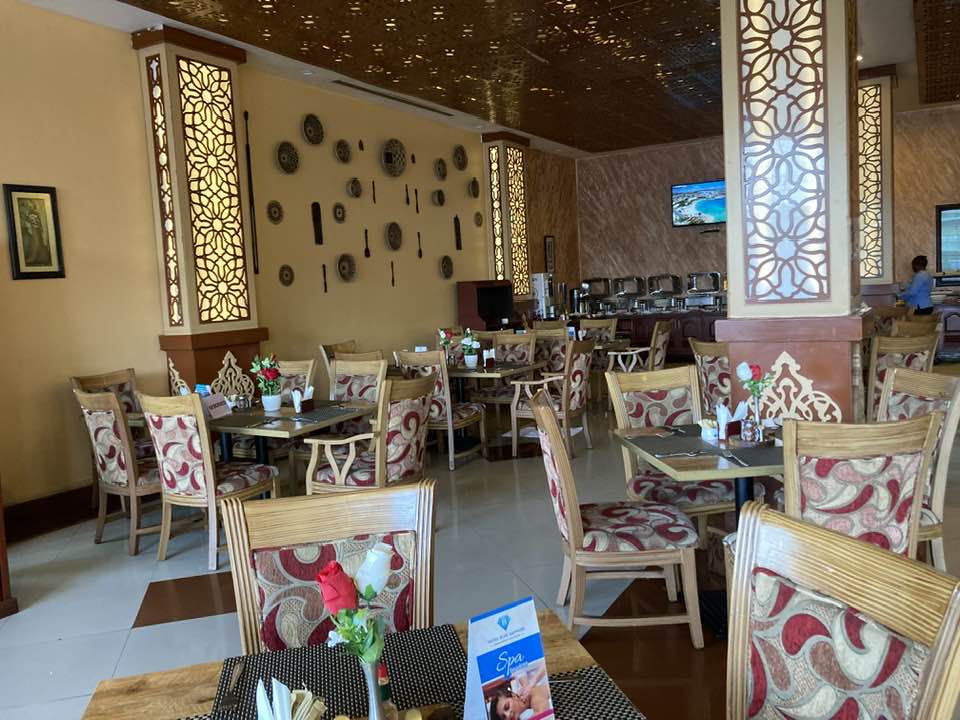
I have just one more encounter in Tanzania to tell you about. One day when we were eating in the lovely restaurant dining room attached to our hotel, I noticed a couple come in that I thought might be Americans. They were with a man who looked like a native Tanzanian.
Not wanting to be rude, I waited until they had finished eating and gotten up from the table before standing up and approaching them. I smiled and said, “Hello, are you Americans?”
The gentleman responded, “No, we’re not.”
“I thought you might be missionaries,” I said.
“Actually, we’re from Australia, but we are missionaries!”
I was excited, telling them that we had been missionaries to Japan.
The gentleman’s wife had joined us and said, “Oh, that’s wonderful. This is our first day as missionaries to Tanzania! We’re on our way to language school.”
I can’t explain the joy that bubbled up in me as we talked. What an honor to get to meet them on their first day as missionaries in Tanzania!
When I mentioned that someone had told me there are about 50% Christians and 50% Muslims in Tanzania, they said, “Well, it depends on who you ask!”
I thought of the young man on the plane who had talked about Christians in Tanzania who were doing things no Christian should ever do. I was even more delighted to know that this couple were here to be missionaries to Tanzania, and I asked if we could pray with them. They happily agreed.
After we prayed, someone took a picture of the four of us which they were going to send us but we haven’t yet received. They gave us their names, and we signed up for their missionary letters which we look forward to receiving.
We delighted in knowing that once again our steps were being ordered by the Lord.
Last week as I looked over the pictures in my blog with us and people with skin much darker than ours, I was reminded of something I read about a little boy who was in a similar situation. He was asked how it felt to be surrounded by people with darker skin than his. He replied, “It felt normal.”
Had I been asked that question, my answer would have been the similar to his, “It felt normal.” And my heart was overwhelmed with love. Never in my life have I lived in a place where I was surrounded by Africans or African Americans but thanks to the way I was raised, I’ve been spared the horrible plague of prejudice. Glory to God!
* * * * * * * * * * *
This last encounter came after our return to the U.S. through a devotional in The Upper Room. On Wednesday, I looked at the picture of the person who had written the devotional as I always do when a picture is given on another page. I discovered that Ree Pashley had lived for a time in Tanzania where her first son was born. Since we just returned from that country, this piqued my interest, and I wondered what had prompted her to live in Tanzania.
I had also been interested in Ree’s devotional on Matthew 20, The Parables of the Workers in the Vineyard. She says, It’s easy for me to resonate with what feels like the unfair treatment of the first, early-morning workers in Jesus’ parable of the workers in the vineyard. I felt the same way.
Since The Upper Room sometimes also has blogs by the author, I checked to see if Ree Pashley also had a blog along with this devotional— she did. Ree didn’t say how she happened to live in Tanzania in her blog, but there was a picture of her children—most if not all with dark skin while hers was white. She talked of welcoming two new foster sons that month which also interested me since we spent quite a few years doing foster care.
In her blog, Ree talks about some of the challenges and the lessons the Holy Spirit has been teaching her in this new situation. She says, What the Holy Spirit has been teaching me, in light of raising and discipling my children, is that fairness does not trump grace. In fact, it’s quite the opposite; grace is superior. Grace is godly.
Wow! …fairness does not trump grace. I’ve been pondering that ever since. Ree also says that her default setting is fairness, as is mine. She says fairness is easier, more direct. Get what you earned. Get what you deserve.
Ree explains that it’s a challenge to live out the kind of grace that trumps fairness. It’s not automatic; it’s intentional. And it is what has been disrupting my inherent bent toward ‘fairness’ recently. She admits that she hasn’t perfected it yet!
I had already told Donn about the author of one of my devotionals having lived in Tanzania for a time, and he looked her up on Google and found more interesting information. She has a blog and I found a way to contact her, so I sent her a message. I hope she’ll respond. Donn says she has a blended family and perhaps that’s why many of her children are black.
During our years of doing foster care, I realized that some of our foster children had an overdeveloped sense of fairness. When our married daughter, Angi, came home to visit, our foster daughter who was seven or eight thought it unfair that Angi didn’t have to go to bed at the same time she did.
Q was sure that she was right in expecting “fairness” in the rules applied to her and the rules applied to Angi, even though the rest of us could see how ridiculous that was. I wonder if our rules for applying fairness sometimes look just as ridiculous to God.
I expect that I will be meditating on the meaning of grace trumping fairness for many days to come. If your default setting is also fairness, perhaps you will be doing the same.
Heavenly Father, help us surrender to you those areas that we are sure we see clearly and allow you to show us the true meaning that is hidden from us. Amen.